Quick answer
How do you make a festive season marketing plan for a small business?
A festive season marketing plan for a small business is a dated list of what you will sell, to whom, with which offer and on which channels. Pick the festivals your customers celebrate, set one clear goal and offer, prepare stock, website and content early, build interest before the peak, sell during the peak and follow up after.
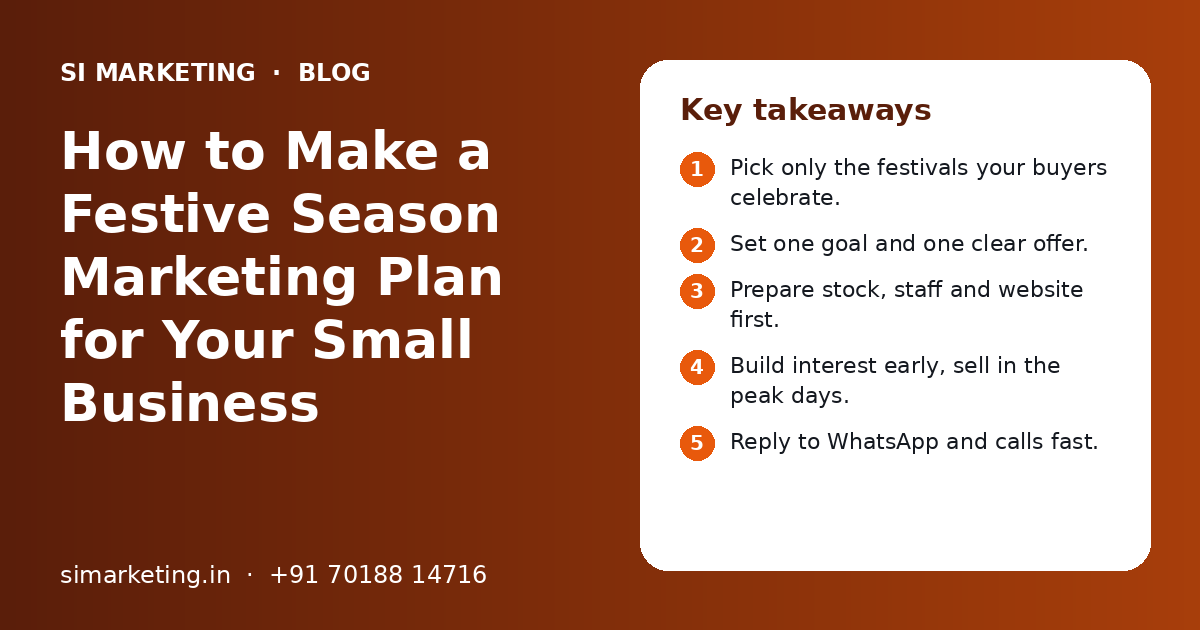
Key takeaways
- Pick only the festivals your buyers celebrate.
- Set one goal and one clear offer.
- Prepare stock, staff and website first.
- Build interest early, sell in the peak days.
- Reply to WhatsApp and calls fast.
- Follow up after the festival for repeat sales.
What is a festive season marketing plan for a small business?
A festive season marketing plan for a small business is a short written plan that says what you will promote during a festival, who you will target, what offer you will give and what you will do each week. It turns a busy season into a set of clear tasks.
Many small shops decide their Diwali offer a few days before the festival and then rush. A plan avoids this. Two pages and one simple calendar are enough.
This plan sits inside your wider festival marketing campaigns approach. That page explains the full festival calendar and ad strategy. This post is the practical checklist you can fill in for your own business.
Which festivals should a small business plan for?
Plan for the festivals your own customers celebrate and spend on. You do not need to run a campaign for every festival. Two or three well-run campaigns a year are better than ten rushed ones.
| Type of business | Festivals that often matter | What buyers look for |
|---|---|---|
| Sweets, dry fruits, gifting | Raksha Bandhan, Diwali, Bhai Dooj, New Year | Gift boxes, corporate orders, home delivery |
| Clothing and footwear | Navratri, Durga Puja, Diwali, Eid, wedding season | New collections, sizes in stock, easy exchange |
| Jewellery | Dhanteras, Diwali, Akshaya Tritiya, wedding season | Trust, purity details, making charges, designs |
| Electronics and home goods | Dussehra, Diwali, festive online sales | EMI options, delivery speed, warranty |
| Restaurants and cafes | Christmas, New Year, Valentine's week, Eid | Table booking, set menus, party packages |
| Local services (salons, decor, cleaning) | Karwa Chauth, Diwali, Christmas, weddings | Slots, packages, quick booking on WhatsApp |
Festival dates move each year, so check them from a trusted calendar before you fix your plan.
When should you start planning festive marketing?
Start planning about six to eight weeks before your main festival. Start public posts and early ads about two to four weeks before. This gives time to fix stock, website and creatives before costs and competition rise.
If a festival has already passed, use what you learned for the next one. After Diwali comes the wedding season, Christmas and New Year. Then come Lohri, Makar Sankranti and Pongal. There is always a next festival to plan for.
| Stage | When | Main tasks |
|---|---|---|
| Plan | 6 to 8 weeks before | Pick festival, set goal, choose offer, check stock and budget |
| Prepare | 4 to 6 weeks before | Shoot photos and videos, update website, set up tracking, write messages |
| Build interest | 2 to 4 weeks before | Teaser posts, early ads, WhatsApp opt-ins, Google profile updates |
| Peak sale | Last 7 to 10 days before the festival | Offer goes live, ads at full budget, fast replies, daily review |
| Follow up | 1 to 3 weeks after | Thank-you messages, review requests, repeat offer, write lessons |
Smaller festivals need less time. A two-week plan can work for a single-day event.
What are the steps to build a festive marketing plan?
Build your plan in eight steps: set a goal, know your buyer, choose the offer, check stock and staff, prepare your online presence, make content, run the campaign and follow up. Do them in this order.
- 1
Set one main goal
Choose one main result, such as shop visits, online orders, bulk gift orders or bookings. Write a simple target you can count, like orders per day, based on your own past sales.
- 2
Know who will buy
Write who your festive buyer is. Are they families, office buyers, young couples or companies buying gifts for staff? Note their city, language and how they like to order.
- 3
Choose one clear offer
Pick one easy offer: a combo pack, a free gift, a gift box, free delivery or an early-bird price. Check your margin after GST, packing, delivery and any payment fees.
- 4
Check stock, staff and delivery
Make sure best-selling items are in stock. Plan extra staff for the peak days. Note the last date you can deliver before the festival.
- 5
Prepare website and Google profile
Update the website banner, product pages, festive timings and contact details. Add the offer and timings to your Google Business Profile.
- 6
Make content in advance
Shoot product photos and short videos. Write posts, ad text, WhatsApp messages and emails before the season starts.
- 7
Run the campaign
Start with interest-building posts and ads, then push the offer in the peak days. Check results every day and move budget to what works.
- 8
Follow up and learn
Thank buyers, ask for reviews, share a repeat-order offer and write down what worked for next year.
If you have never written a campaign plan, our digital marketing strategy page explains how a long-term plan and short campaigns fit together.
Need help with your project?
Talk to the SI Marketing team. Free first call, simple advice, clear quote.
How do you choose the right festive offer?
Choose an offer that is easy to understand in one line and still leaves you a profit. A clear gift box or combo usually works better than a long list of different discounts.
Offers that often suit small businesses
- Ready gift boxes or hampers at set prices
- Buy two, get a small free gift
- Free delivery within your city
- Early-bird price for orders placed before a date
- Free gift wrapping and a personal card
- Bulk order rates for companies and societies
Offers to be careful with
- Deep discounts that wipe out your margin
- Many offers at once that confuse buyers
- Fake 'was' prices or misleading claims
- Offers you cannot deliver on time
- Last-minute changes to terms after people order
Write the offer in plain words
Say what the buyer gets, the price or saving, how to order and the last date. For example: "Diwali dry fruit box, free delivery in the city, order on WhatsApp before the date shown." Put the same words on your posts, ads, website and shop board.
Make paying easy with UPI, cards or cash on delivery, and give GST invoices to business buyers.
Which channels work best for festive marketing?
Use two to four channels where your buyers already spend time. For most small Indian businesses, that means WhatsApp, Instagram and Facebook, Google Search or Maps, and your own past customers.
| Channel | Best festive use | Good for |
|---|---|---|
| Send the offer to past buyers who opted in, take orders, answer questions | Almost every small business | |
| Instagram and Facebook | Show products, reels, gift ideas and the offer | Gifting, fashion, food, decor, salons |
| Meta ads | Reach new local buyers and people who visited your page | Shops and brands with clear products |
| Google Search ads | Catch people searching for gifts or products near them | Shops with a website or landing page |
| Google Business Profile | Show festive timings, offers, photos and reviews | Any shop or service with a local address |
For WhatsApp, follow the rules. Message only people who agreed to hear from you and give an easy way to stop messages. Our WhatsApp marketing services page explains the safe way to send broadcasts.
For paid social, our Meta Ads agency team can run reach and sales campaigns for the season. If people search for your products, our Google Ads management team can set up search campaigns that only show in your delivery area.
For a local shop, a well-kept Google profile brings walk-ins during festival shopping. Read our local SEO services page to see what helps you show up in nearby searches.
What should a festive season marketing checklist include?
A festive checklist should cover your goal, offer, stock, staff, website, tracking, content, channels, replies and follow-up. Tick each item before your offer goes live.
- Festival chosen and dates checked for this year
- One main goal written down with a simple target
- One clear offer with margin checked after GST and delivery
- Stock of top items confirmed with suppliers
- Last delivery date decided and shown to buyers
- Website banner, product pages and payment tested on a phone
- Google Business Profile updated with timings, photos and offer
- Tracking set up for orders, forms, calls and WhatsApp clicks
- Photos, reels, posts and ad text ready in advance
- WhatsApp message templates and quick replies ready
- Ad budget split by week, with more for the peak days
- One person in charge of replies during business hours
- Thank-you and review request messages written
Give each item an owner and a date. During the peak, keep someone ready to reply on WhatsApp and calls, because many buyers ask one question before they pay. Remarketing ads can remind visitors who did not buy before the offer ends.
How do you track whether the festive campaign worked?
Track sales and leads by channel, not just likes and views. Compare results with your goal, your ad spend and your profit per order.
Use UTM links on every link you share, so you know which post, ad or message brought each visit. Our post on how to use UTM links to track campaigns shows how to set them up in minutes.
| What to track | Why it matters |
|---|---|
| Orders or bookings by channel | Shows which channel really brought sales |
| Cost per order or lead | Shows how much each sale cost in ads |
| WhatsApp chats and calls | Many festive sales start with a chat, not a form |
| Profit after all costs | The real test of the season |
After the festival, thank buyers and ask happy ones for a review. Our Google review management page explains how. For walk-in shops, ask each buyer how they heard about the offer. Our marketing analytics services can set up one simple report that brings these numbers together.
What festive marketing mistakes should small businesses avoid?
The most common mistakes are starting too late, giving too many offers, running out of stock, replying slowly and stopping all contact after the festival. Each one is easy to avoid with a plan.
- Starting ads only in the last two or three days, when costs and competition are highest
- Running ads that send people to a slow website or a broken form
- Sending WhatsApp messages to people who never opted in
- Forgetting to show the last delivery date
- Not saving buyer details for the next festival
Costs for a festive campaign depend on the number of festivals, channels, content needed, ad budget and how long you want support. Our guide on digital marketing cost in India explains what affects cost. SI Marketing is powered by Shivah Web Tech, with 11+ years of experience, a 25+ in-house team and 500+ projects. You get a clear quote after a free call. Contact us to plan your next festive season.
Frequently Asked Questions
How early should a small business start Diwali marketing?
Start planning about six to eight weeks before Diwali. Use the first weeks to fix your offer, stock, website and content. Start public posts and early ads about two to four weeks before, and push your offer hardest in the last week to ten days. Starting early also lets you reach people before ad costs rise in the peak days.
Can a small business do festive marketing with a low budget?
Yes. Start with low-cost steps: message past customers who opted in on WhatsApp, update your Google Business Profile, post daily on Instagram and Facebook, and put a clear offer board in your shop. Then add a small ad budget on one platform where your buyers spend time. Increase spend only on ads that bring real orders.
What are good festive offer ideas for small shops?
Good offers are simple and protect your margin. Ideas include ready gift boxes, combo packs, a small free gift with a minimum order, free local delivery, free gift wrapping, early-bird prices before a set date and bulk rates for companies buying gifts for staff. Pick one main offer and use the same words on every channel.
Is WhatsApp good for festive season sales?
Yes, WhatsApp works well because many Indian buyers like to ask a question before they pay. Use it to send offers to past buyers who opted in, share a catalogue, take orders and confirm delivery. Keep messages short, add a clear way to order and reply quickly. Never message people who did not agree to hear from you.
Should I run Google Ads or Meta Ads during festivals?
It depends on how people find your product. If they search for it, such as gift hampers near me, Google Search ads catch that demand. If your product is visual or people discover it while scrolling, Meta ads on Facebook and Instagram work well. Many small businesses use Meta to build interest and Google to catch searches.
How do I plan marketing for festivals after Diwali?
After Diwali, look at the wedding season, Christmas, New Year and the January harvest festivals like Lohri, Makar Sankranti and Pongal. Pick the ones your buyers celebrate. Reuse what worked in Diwali, such as your best creatives and offers, but change the message to fit the new festival. Start planning a few weeks before each one.
What should I do after the festive sale ends?
Send a thank-you message to every buyer, ask happy customers for a Google review and share a small offer for their next purchase. Save buyer details with their consent for future festivals. Then review your numbers: which channel brought sales, what each order cost and which offer worked. Write these lessons down for next year.